What we're watching this end-of-session

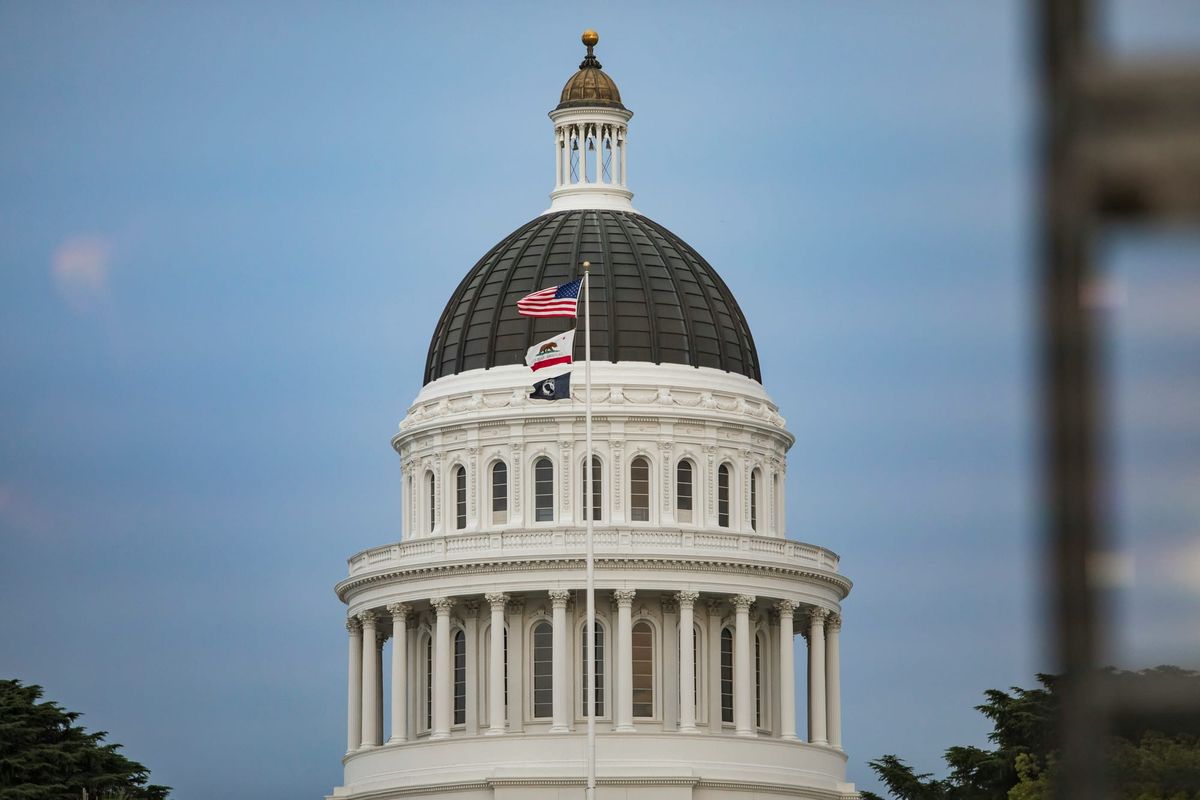
Wildfire spending reforms are dominating Sacramento’s end-of-session dynamics, but a handful of good clean energy bills also face deciding votes this month.
Politico reported yesterday that the governor’s office floated a wildfire package that would include ratepayer relief, among other important reforms. That would be a big win for clean energy, for reasons we’ve written about. Other energy bills that remain in play would reduce delays connecting clean power projects to the grid, make it easier to put solar panels on dried-out farmland, and streamline permitting for not-yet-endangered species. The bills have until Aug. 31 to receive final votes.
They’re all about speed and cost. It’s becoming increasingly clear that California’s grid could be in trouble by the mid-2030s if the state doesn’t build clean energy and transmission faster to meet rising demand. At the same time, California needs to cut costs to make electricity more affordable.
There’s hope for progress on both fronts this month. But first, wildfires.
Wildfires bear on clean energy because they’re such a big driver of electricity prices. Utilities’ wildfire spending was the biggest factor in rate increases of up to 101% over the past decade, according to the latest report from the CPUC’s Public Advocates Office.
Wildfire-related spending — a combination of paying for past fires and upgrading equipment to prevent future fires — now adds about $41 per month to the average PG&E bill (19%). It’s $27 for SCE and $21 for SDG&E, and the spending is expected to keep pushing up rates, according to a landmark April report from the California Earthquake Authority.
That’s money that could be better spent on the poles and wires needed to ferry around all the new power California must build to meet rising demand. Those investments bring down costs in the long run — saving, by one study’s estimation, $4.70 for every $1 invested — but they’re more difficult to make when Californians are already struggling to pay their electric bills.
A reform package that finds other ways to pay for wildfires would provide critical headroom to make those needed investments in a California powered by clean energy — which is the cheapest, fastest energy you can build today, according to financial firm Lazard.
AB 2493
Another tool to aid grid investments is AB 2493, authored by Assembly Utilities and Energy Committee Chair Cottie Petrie-Norris. The bill, which is co-sponsored by ACP-CA and the Union of Concerned Scientists, targets utility delays making equipment upgrades that are needed to bring clean energy projects online.
The upgrades are often relatively simple — things like expanding substations, replacing transformers and swapping out old power lines. They are delayed across California, often by years, affecting nearly 22 gigawatts’ worth of clean energy projects, according to a CPUC report.
Incorporating proposed amendments, AB 2493 would bring in a monitor at the CPUC to dig into the delays and recommend fixes. Utilities would be required to act on the monitor’s findings.
The Senate Energy, Utilities and Communications Committee approved the bill last month. It’s on the Senate Appropriations Committee’s suspense file and will be voted on by the committee on the 13th. If approved, it would require a vote on the Senate floor and a concurrence vote in the House by Aug. 31 to advance to the governor’s desk.
AB 1156
AB 1156 would make it easier and cheaper to build clean energy on fallowed Central Valley agricultural lands. It’s an elegant solution to two hard problems for California: There’s not enough groundwater to support continued farming at today’s levels, and California needs to build a lot more solar power to keep up with rising energy demand and its clean energy goals.
All that solar needs somewhere to go, and the San Joaquin Valley has emerged as prime territory. It’s flat, sunny and there are fewer concerns about endangered species than in the deserts to the south.
But a lot of Central Valley agricultural land is tied up in contracts under the Williamson Act, a 1965 law meant to keep farmland in production. To put solar panels on those lands, farmers must navigate a web of approvals and pay steep upfront fees to exit Williamson Act contracts.
AB 1156 would allow farmers to suspend the contracts while the land is being used for solar, avoiding the exit fees. Because those fees get baked into electricity prices, the change would make electricity cheaper. It would only apply to the most water-constrained areas, where some farmers are already fallowing acreage to reduce groundwater usage in line with the Sustainable Groundwater Management Act. As the L.A. Times recently reported, many farmers view solar as a lifeline, replacing lost crop revenue.
The bill, authored by Assemblymember Buffy Wicks, was introduced last year. It cleared the Assembly and the Senate with support from groups like the Western Growers Association and the Almond Alliance before being held at the last minute by the author over concerns from the governor’s office. It will likely need to be amended to satisfy those concerns in order to advance.
AB 550
AB 550 would fix a California Endangered Species Act permitting wrinkle that can stop clean energy projects in their tracks.
In general, California law balances species protections with the state’s other priorities, including transitioning to 100 percent clean power by 2045. If a clean energy project is expected to affect the habitat of a species listed under the act, developers can get “incidental take” permits that typically require them to protect bigger swaths of the species’ habitat elsewhere.
But developers can only get those permits after a species is listed under the law. That creates the following wrinkle: If a species is listed as endangered while a project is under development, the project can’t continue until the developer gets the incidental take permit, which can take months or more. The delays drive up costs.
AB 550 creates a permitting pathway by enabling developers to seek incidental take permits before a species is listed, when signs point to listing soon.
It’s awaiting Senate Appropriations Committee approval on Aug. 13th and, if approved, would require a Senate floor vote and a concurrence vote by Aug. 31.
Wildfire reforms deserve the end-of-session spotlight. They are addressing hard problems that desperately need to be solved. The clean energy slate also shouldn’t be overlooked — it delivers targeted solutions for California to build the energy it needs faster and more affordably.
What's happening
Politico’s The California Agenda: Sacramento Summit — Gubernatorial candidates Xavier Becerra and Steve Hilton headline this Politico event that also features CEC Board Chair David Hochschild, CPUC President John Reynolds and CARB Chair Lauren Sanchez. Aug. 11, Sacramento, free (registration required).
Advanced Energy United’s California Powers Up: Energy and Policy Solutions Summit — Features Hilton, Hochschild, Reynolds, Petrie-Norris and other legislators. Aug. 11, Sacramento, $495.
The Second California Battery and Energy Storage System Symposium — California State Fire Marshal Daniel Berlant, other state fire marshal, local and national fire officials and experts discuss public safety response, permitting and planning for battery storage systems. Aug. 20, Garden Grove, $100.