How clean energy fared in the California Legislature


California lawmakers passed a trio of clean energy bills this year that make it meaningfully faster and cheaper to build clean power in California, but they were overshadowed by the lack of a wildfire liability deal.
They are good bills: AB 1156 cuts costs and red tape for farmers who want to put solar panels on their land. AB 2493 takes aim at transmission upgrade delays that are preventing new clean power projects from coming online. AB 550 smooths out a permitting wrinkle related to species that are candidates for protection under the California Endangered Species Act.
But on Wednesday, a day after the Legislature adjourned without addressing California utilities’ unlimited exposure to wildfire liability costs, PG&E announced it will delay or defer $2 billion worth of critical work in 2027, including prepping the grid for new clean energy projects and providing power to new housing developments.
“We will do this so that we borrow less money and avoid some of the more expensive interest rates which would drive up customer costs,” PG&E CEO Patti Poppe said in a video recording.
The development isn’t surprising. Unlike in any other Western state, utilities in California are responsible for unlimited damages when their equipment sparks a fire, even when they have prudently minimized risks and even when damaged properties are insured.
“When risk goes up, lenders charge more,” Poppe said in the video. “And because customers ultimately pay for the things we build for them, higher interest means higher costs for customers. When investors face higher risk, they have choices. They can take their money somewhere else, and they have. That means there’s less money available to do the work California needs. We have reached a point where something has to change.”
Those complex financial realities are easily drowned out in the Capitol by insurance companies, trial attorneys and hedge funds who have tagged the necessary reforms a “utility bailout” and harnessed justifiable anger at investor-owned utilities to sway lawmakers against the difficult reforms.
Lost in the noise is the fact that even though investor-owned utilities are private companies, they are treated much differently than most private companies under California law. UC Berkeley economist Meredith Fowlie explains it well in an excellent recent blog post: “Back in the day, courts reasoned that electric infrastructure serves the public, so when one property owner suffers an outsized loss from that infrastructure, the cost should be spread across the broader community. Private utilities were treated like public ones because they have an obligation to provide a public service and can spread costs across their customers.
These utility rules were designed under a different wildfire regime. As the climate changes, fuel loads accumulate, and more people move into high hazard areas, sending electricity along power lines on red flag days is getting much riskier. I think we need to rethink how these risks are shared and paid for.”
And as the Breakthrough Institute’s Lauren Teixeira explained in a recent episode of Heatmap’s Shift Key podcast, utilities are creatures that respond to incentives. Under today’s wildfire framework, they are incentivized to spend endless amounts of (ratepayer) money on risk reduction to try to avoid the one spark that could saddle them with unlimited billions in costs.
Newsom proposed a package of measures to put some reasonable limits on utilities’ exposure when fires sparked by their equipment turn into major conflagrations due to factors outside their control. The package also included measures to address the conditions that turn fires into catastrophes, such as dense fuels in residential areas.
The Assembly and the Senate each rejected that package, pitching narrower reforms that didn’t land well in the finance world. California investor-owned utility stocks plunged over the weekend. Nonetheless, the three branches of government reportedly reached agreement on a narrow compromise package in SB 492. Then the Assembly decided against adopting the package in the final hours of the legislative session on Tuesday.
In closing remarks on the Assembly floor, Speaker Robert Rivas floated the possibility of continuing work on a reform package in a special session this fall.
“We have the responsibility to make some hard decisions and deliver real results,” he said. “We have to finish this job.”
The result will have big implications for clean energy in California, for reasons American Clean Power-California Executive Director Alex Jackson and Independent Energy Producers Association CEO Jan Smutny-Jones recently detailed in the Sac Bee. But PG&E stated it plainly: The utility will prioritize wildfire risk reduction over clean energy and other initiatives if it can’t borrow enough money to do them all.
That’s hard to argue with. But those plans can still change if a reform package comes together. If it doesn't, it’s essential to give regulators the tools to ensure grid upgrades assigned to PG&E — the ones clean energy projects are depending on to come online — don’t get left by the wayside. That’s even more reason for Gov. Newsom to sign AB 2493.
But even with AB 2493, AB 1156 and AB 550 on the books, another utility bankruptcy could pause the clean energy transition, tank utility credit ratings, increase electric rates and threaten the state’s ability to keep the lights on. It’s the cloud hanging over clean energy’s end-of-session picnic.
In the budget
The Legislature delivered a couple more clean energy wins in budget trailer bills.
Geothermal: The budget allocates $10 million from the state’s Greenhouse Gas Reduction Fund for exploratory geothermal well drilling. That’s in addition to $10 million lawmakers allocated from the general fund in June for the same purpose.
Geothermal holds lots of promise as a 24/7 source of emissions-free energy that could help California reach its goal of 100% carbon-free energy by 2045. But exploratory wells are expensive and time-consuming to drill. It’s an area where early state investment could unlock billions in private investment and give California an edge over other states and hyperscalers that are also eager to add geothermal to their energy supplies.
Transmission accelerator: Another budget trailer bill fleshes out details of the California Transmission Infrastructure Accelerator the Legislature directed the administration to stand up in last year’s SB 254.
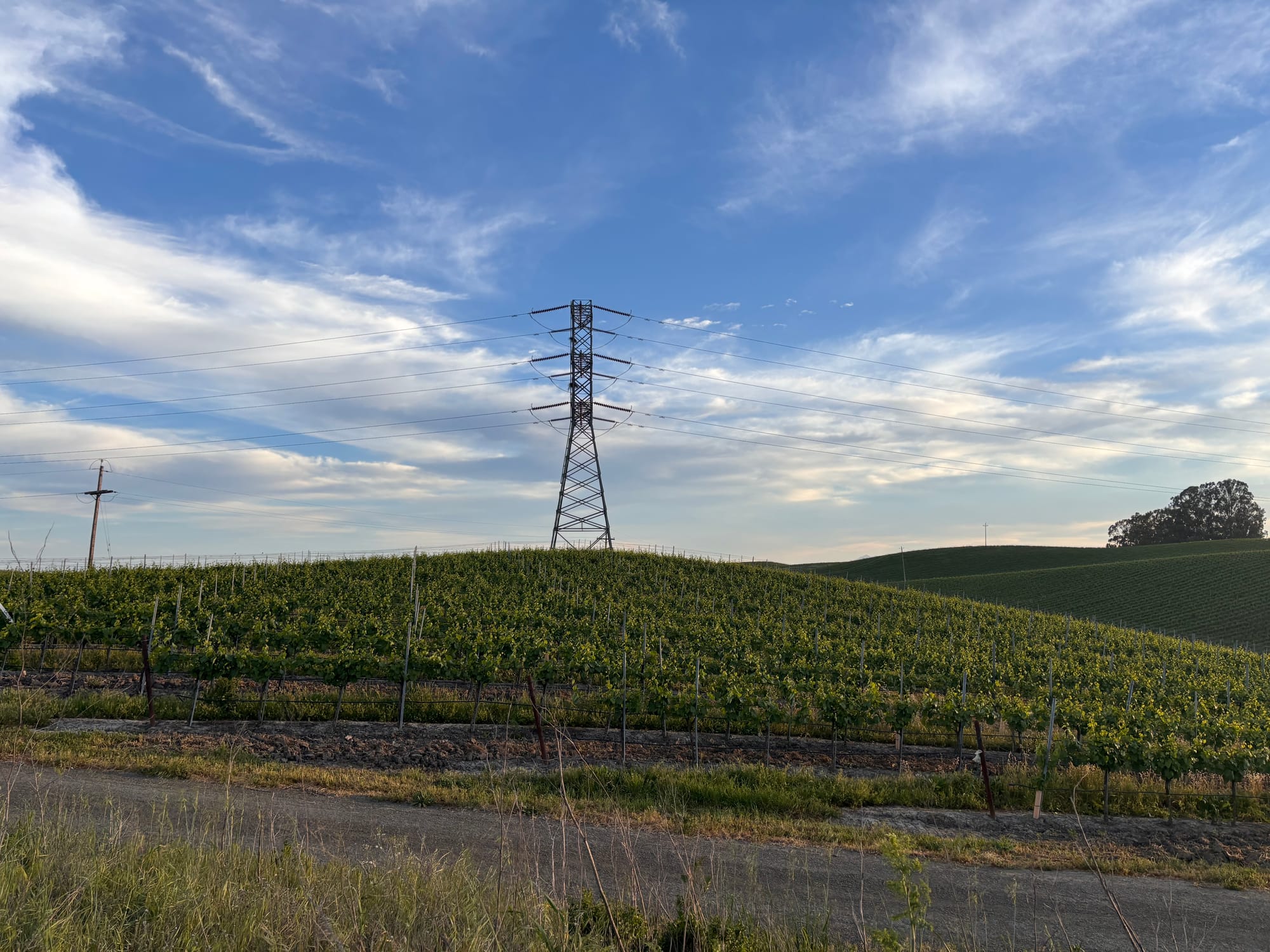
The program, as we got into earlier this year, aims to leverage low-cost public debt to trim financing expenses, which often make up a large portion of total project costs. It’s an interesting idea, but as we wrote, the program should also aim to maximize the demonstrated value of competition in transmission infrastructure development.
The new trailer bill adds more clarity around how the Governor’s Office of Business and Economic Development will develop the program and interact with CAISO’s competitive process. It also clarifies the range of transmission developers who can participate and directs GO-Biz to develop guidelines that will help all parties determine how the accelerator will function.
A Western markets realignment, maybe
Big news for a very specific set of people: Bonneville Power Administration, the largest transmission owner and operator in the Pacific Northwest, is considering joining California’s day-ahead energy market instead of one run by an Arkansas-based competitor.
Joining the Extended Day-Ahead Market would represent a major reversal for BPA, which opted in May 2025 to pursue participation in Southwest Power Pool’s Markets+ instead of EDAM. BPA made the decision based on governance structures, deciding that Markets+ offered the most independence from state-level politics.
But in a letter yesterday, newly-appointed BPA Administrator Travis Kavulla noted BPA’s decision to join Markets+ came before California’s passage of AB 825, which cleared the way for the EDAM to be governed by a new, independent organization. Kavulla cited the significant potential benefits of participating in the EDAM, which is larger than Markets+ and which is connected to the successful Western Energy Imbalance Market in which BPA already participates.
But he remains worried about governance, citing “administrative decision-making that subtly, but with great consequence, puts its thumbs on the scale” during crises. He detailed in the letter what exactly he wants to see from the new organization (called the “ROWE”) to be assured of its independence, including that it be based outside California. He said BPA will decide by the end of the year which market to go with.
Granholm endorses Prop 45
Former U.S. Energy Secretary just endorsed Prop 45, the Building an Affordable California Act, which would streamline and modernize the California Environmental Quality Act by, among other things, adding deadlines for local government agencies to complete reviews and issuer permitting decisions.