Battery energy storage for the win


Barring something crazy happening in the next week, California has navigated another summer without any drama on its power grid.
You can thank battery energy storage, the transformative technology making California less dependent on fossil fuels in the evening. Batteries aren’t yet the household name that solar or wind is, but the tech has become a cornerstone of the state’s renewable energy supply over the last six years.
Before and after 2020’s rolling blackouts, California energy regulators placed massive orders for more grid-scale batteries to bolster reliability. A boom followed, with the state expanding its storage fleet by 2,500% to reach 21 gigawatts this year.
Battery energy storage systems most often charge up when California’s grid is awash in low-priced solar power. Operators dispatch that stored power back onto the grid later, usually in the evening hours as the sun goes down, allowing California to run on renewables instead of natural gas when the sun isn’t shining and there’s not enough wind to meet demand.
Not to get too technical, but the stored power has to “clear” in energy markets to be picked up on the grid, meaning it has to be cheaper than natural gas that’s on offer at the same time. Because of that, grid-scale batteries are saving money as they displace fossil fuels.
But back to the buildout. The 2020 blackouts occurred on Aug. 14, a little after energy demand peaked at 46.8 gigawatts. You probably didn’t notice, but demand rose higher than that just last week, reaching 47.5 GW on Sept. 10 (in what was likely the highest-demand day of this year).
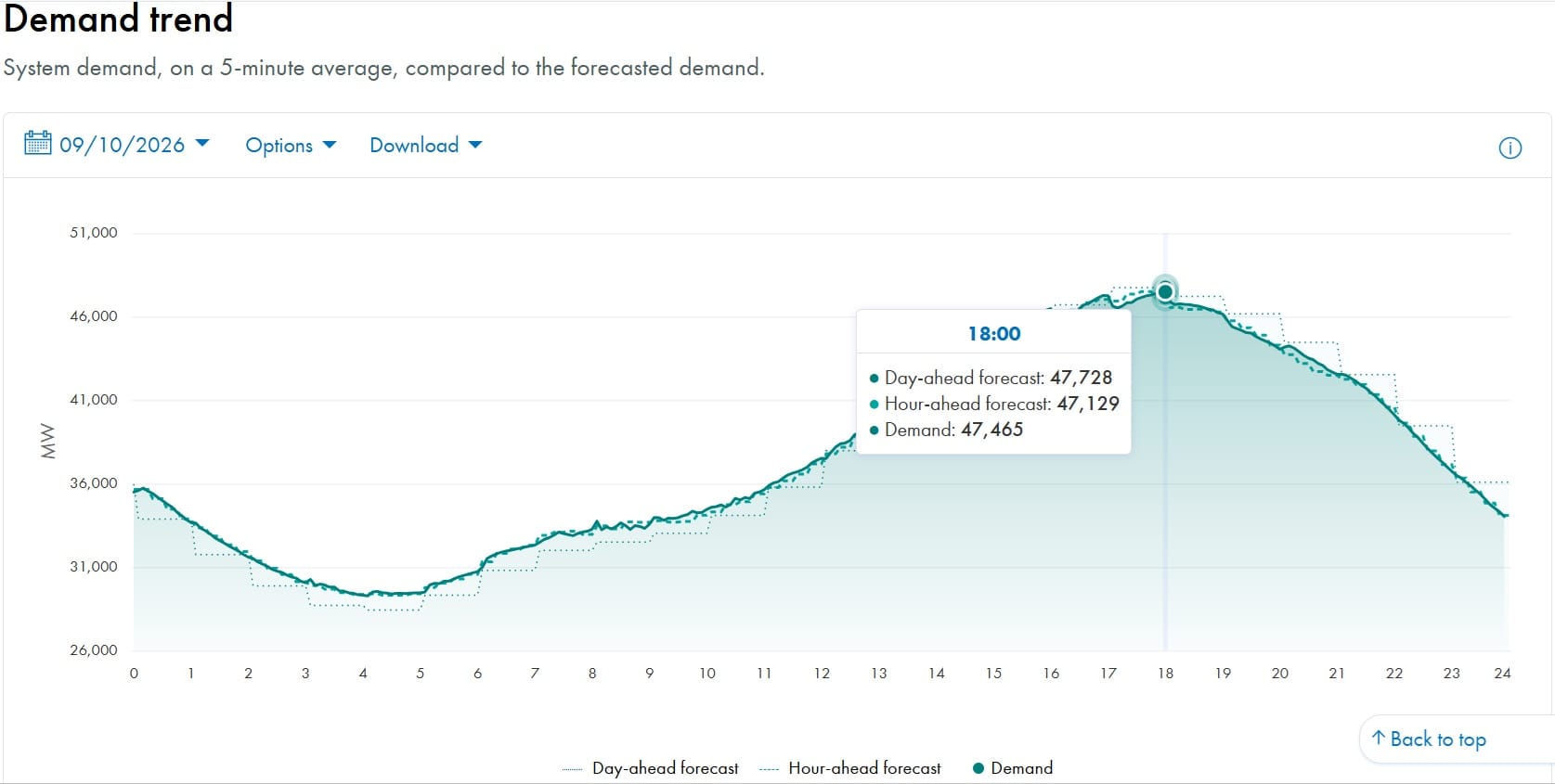
Demand peaked in 2020 just before 5 p.m., when there was still a lot of solar on the grid. The problem came a little later, at almost 7, when solar had started to drop off but demand — driven by air conditioners — stayed high. Experts call it “net peak demand.”
The big difference this year was that during the net peak, at 7 p.m., batteries were supplying 9,300 megawatts of power, having leapt up from zero megawatts two hours earlier. That’s compared to about 110 megawatts during 2020’s net peak.
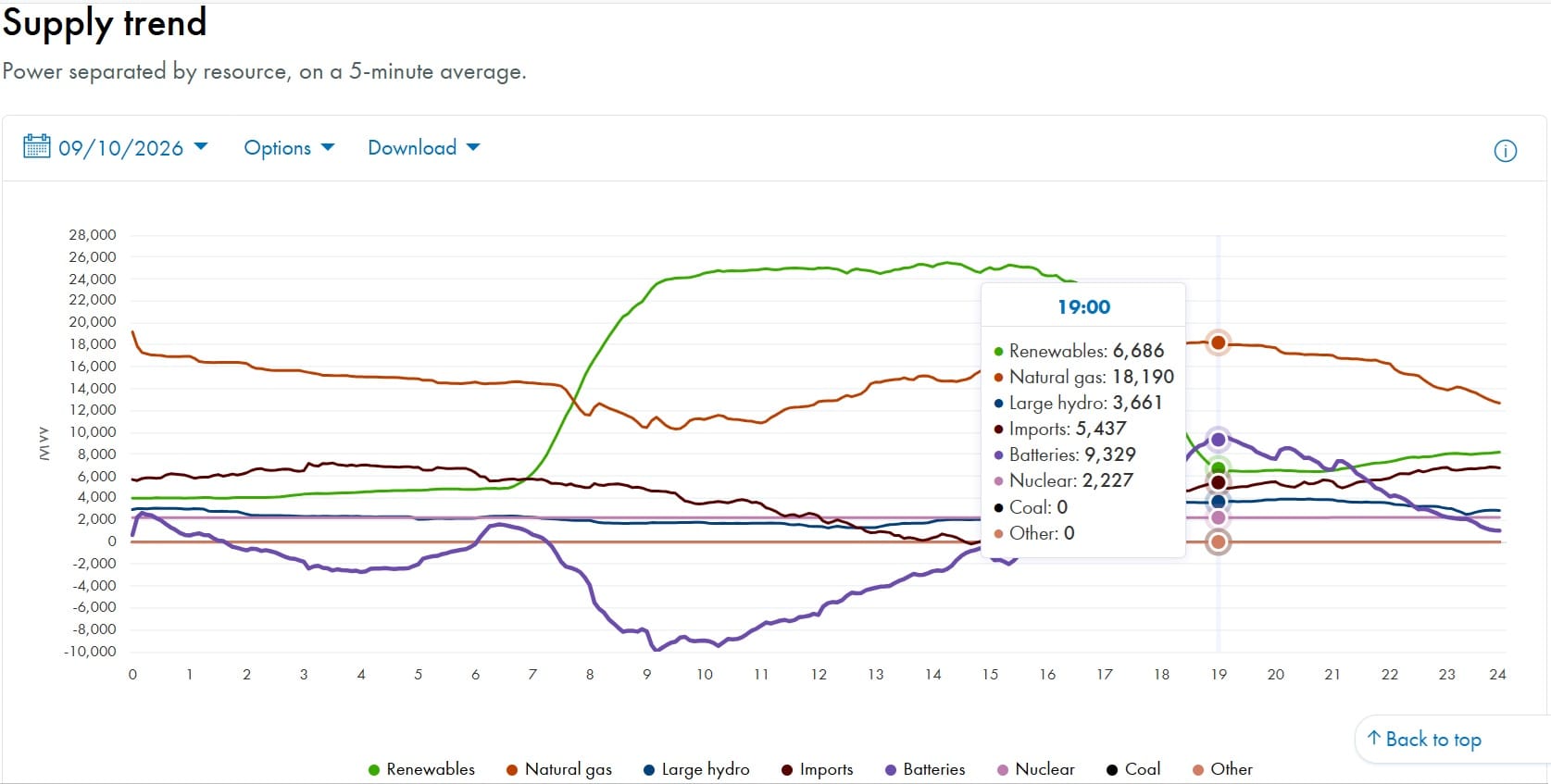
Batteries are doing a lot of work on the grid, but state plans call for adding a lot more. To ensure California can meet rising demand from electric vehicles, electric appliances, increased manufacturing and data centers with clean energy, California will need about 52 GW of energy storage by 2045, according to the California Energy Commission.
If the state were to continue at its current clip, that wouldn’t be a problem. But it’s getting harder to build battery energy storage systems in California.
A big reason is Moss Landing, the battery facility in Monterey County that caught fire in January 2025 and served as an unfortunate introduction to the technology for many.
The facility at Moss Landing, in which thousands of batteries were housed inside a big repurposed natural gas building from the 1950s, is in no way representative of how the systems are built today. But it’s what a lot of people read about when they turn to Google after hearing about a local battery storage proposal.
Today, lithium-ion batteries are housed in modular units that resemble shipping containers. The containers are outfitted with fire-resistant materials and automated sensors, and are spaced far enough apart that in the rare instance of a fire, the fire is quickly detected and doesn’t spread. California law requires projects to consult with local fire departments on design and to comply with National Fire Protection Association standards that incorporate the most up-to-date safety features and design practices.
These advances have led to vast improvements in the safety of battery storage systems. Failure rates dropped 99 percent from 2018 to 2025, according to Electric Power Research Institute data.
Batteries are included alongside almost all new large-scale solar projects built today in California, and they’re also proposed as standalone projects sited closer to where people use the electricity they store.
These deposits of stored electricity make local grids more reliable, especially in places like the West L.A. Basin where transmission lines carrying power to the coast are heavily congested. The California Public Utilities Commission is evaluating whether to place a specific order for more batteries in the basin to preserve local reliability.
And, of course, they’re good for local economies, providing jobs and paying taxes. California is increasingly becoming a leader not just in installing batteries but in manufacturing them. The state ranked No. 1 for potential future battery manufacturing sites, with nine in the pipeline, according to a clean energy manufacturing report American Clean Power released in the spring. Peak Energy announced in July that it will start manufacturing sodium-ion batteries, a promising complement to lithium-ion technologies, right here in Sacramento.
Looking ahead, the big thing California and the rest of the world needs batteries to do is to power the grid longer.
Most lithium-ion arrays are designed to discharge power for four hours. That helps with the end-of-day-solar dropoff, but it doesn’t power California through the night. In June, California’s first eight-hour lithium-ion project came online in Kern County and other technologies like flow batteries and iron-air batteries are primed to fill the gap. California has supported development of some of those technologies through CEC grants and has incorporated some long-duration energy storage into procurement orders. A recent CPUC proposal, for example, calls for almost three times as much 8-hour storage in 2035 as it does 4-hour storage. That kind of steady commitment to reliability tomorrow as well as today is what’s needed to ensure a smooth transition to a cleaner grid for California.
So, next time the California sun is sinking low amid 100-degree heat but you’re staying cool, spare a thought for battery energy storage.
BESS digital hub
For more on battery energy storage systems, also known as BESS, check out the brand new online hub ACP-California launched with the California Energy Storage Alliance featuring fact sheets, press releases, links to recent articles like this one in the L.A. Times, and more.
Shaking up the portfolio
Speaking of resource diversity, a new CPUC electricity planning proposal calls for building more solar and storage in the near-term while pushing out some wind and geothermal development to the mid-2030s to early 2040s.
The proposal, issued as part of the 2027-2028 Transmission Planning Process, floats changes to the state’s electricity portfolios. The most consequential may be a suggestion to relax the state’s carbon reduction goal for the electric sector by about 21%, allowing for 38 million metric tons of carbon from the sector in 2030 rather than the current 30 million metric tons.
Federal policy shifts, tariffs and other factors are making clean energy more expensive to develop, the proposal notes. Relaxing the target would reduce the need for aggressive near-term build rates while saving around $1.4 billion per year by 2030. California’s Renewable Portfolio Standard and clean energy standard targets under SB 100, which are based on the percentage of retail electricity sales, would remain intact.
The clean energy industry definitely faces additional challenges under current federal policies, and improvements on affordability are needed to support a successful clean energy transition (looking at you, wildfire). But California needs to maintain diversity in its portfolio to truly decarbonize the grid and operate it reliably. Wind and geothermal are critical pieces of that puzzle and the decisions we make today will determine whether we can access those resources before the end of the next decade.
Programming note
The Current will be taking a break from publishing while I go back on paternity leave for the next couple months with my four-month-old son. We’ll resume publication after I get back.