New Central Valley solar fees would burn California ratepayers

Fees on fire
Solar paired with storage is the cheapest, fastest energy you can build today, thanks in part to California’s pioneering support of the technology that goes back two decades. But as the state embraces an abundance agenda to speed housing and clean energy buildouts, affordability needs to be guarded — including from excessive fees that drive up costs.
Case in point: a Fresno County Fire Protection District plan to charge solar and storage developers huge fees for basic services.
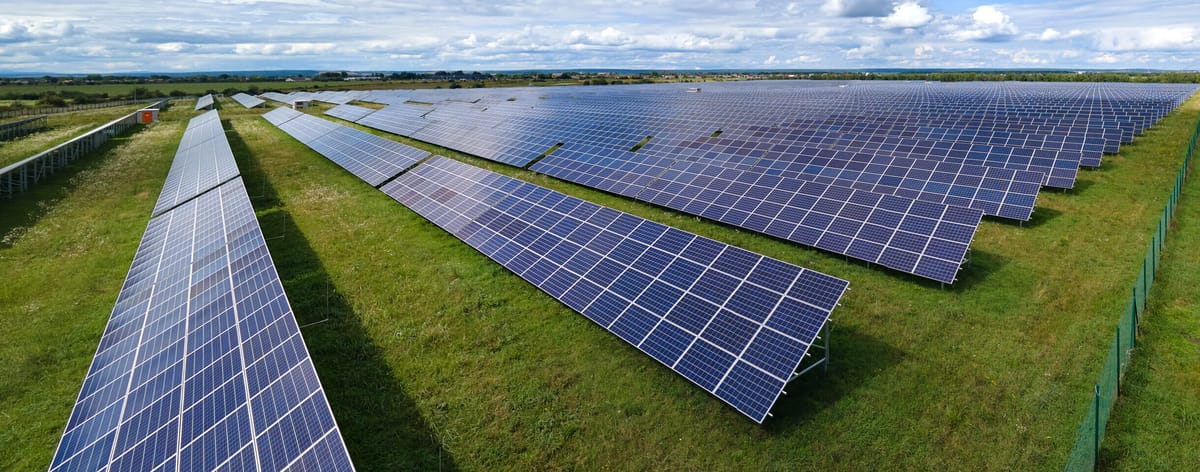
The FCFPD is demanding solar and storage developers pay steep upfront costs and then make annual payments that would double the district’s budget — from $40 million to nearly $80 million — to provide fire services for large-scale solar and storage projects in West Fresno County, according to a summary of FCFPD’s plan.
Fees of that size aren’t warranted for projects with extremely low fire risk that will already be paying property taxes that go to the fire district.
The proposed fees are much higher than anywhere else, they haven’t been justified by the district, and they would make electricity produced by the projects more expensive. Because Fresno County requires developers to reach agreements with FCFPD to get building permits, developers could be forced to pay the excessive fees and factor the costs into electricity prices.
Solar prices are already ticking upward due to interest rates, tariffs, supply-chain issues, expiring federal tax credits and other factors outside California’s control. We can’t afford unwarranted additional costs that make electricity even more expensive. Fresno County is the heart of California’s clean energy future due to its abundance of sunshine and suitable land, making it critical to establish fair terms now that protect both local residents and electricity ratepayers.
Luckily California already has a tool to keep fees fair. Lawmakers created the Mitigation Fee Act in the 1980s, formalizing a process local governments must follow when imposing costs on public infrastructure.
The law generally requires that development fees and conditions have a direct connection to project impacts and that the fees or conditions are “roughly proportional” to impacts. Those impacts and fees are determined through a “nexus study” that can be challenged or audited.
Developers of all kinds regularly help pay for fire stations and equipment through development impact fees. The Mitigation Fee Act gives counties the authority to develop the fees and to allocate the revenue to fire districts. The FCFPD has developed its own per-megawatt formula without a nexus study (or at least not one it’s made public), which isn’t the process laid out in the law. The fees target only solar and storage projects, not other forms of development, unfairly saddling the industry with all of the costs of expanded fire service for a growing region.
The Mitigation Fee Act specifies the fees may be used for facilities or equipment, not salaries. But under the district’s funding methodology, more than 80% of the annual payments would go toward the salaries of some 120 new employees. The Mitigation Fee Act also only allows funds to be spent on infrastructure and equipment needed for new development. Fees cannot be charged to support existing development. It is impossible to tell from the district’s methodology whether that crucial distinction has been made. A properly prepared nexus study would be required to exclude costs to serve existing development.
It makes sense the district might need some more employees to handle added responsibilities related to the projects. But those expenses are meant to be covered through property taxes and special taxes. While solar additions have been excluded from property tax assessments in California for both residential and commercial properties (part of the state’s afore-mentioned fostering of the technology), that changes at the start of next year, when the exclusion expires. Battery storage projects already pay property taxes.
It’s not clear yet how much solar developers will pay, but the county assessor provided an estimate for one project, the Darden Clean Energy Project, that found the fire district’s share of the property tax would be about $4.5 million per year. The full portfolio of West Fresno Projects will come to much more than that.
The 11 projects under development in West Fresno County will efficiently deliver a combined 28 gigawatts of solar and storage, supplying millions of homes and thousands of businesses with clean, reliable power in alignment with the state’s clean energy goals. Solar and storage don’t pose more risk than other industrial development, but FCFPD’s proposal would have them pay roughly $2 billion on top of property taxes over the projects’ 35-year operating lives.
The FCFPD hasn’t explained why it believes added risks warrant that much money. It hasn’t publicly said how the spending would reduce the risk. These fees first appeared in April of last year, when FCFPD’s board approved the $40 million-per-year plan. Then the board hired a consultant to flesh out the plan. The district appears to have provided the California Energy Commission with some sort of methodology as part of the Darden Clean Energy Project’s AB 205 permitting process, but the methodology was marked confidential and not shared with the public.
This is an urgent issue. In addition to building clean energy affordably, California needs to build it quickly to keep up with demand that is surging due to EVs, building electrification, manufacturing and data centers. Short-term demand forecasts keep ticking higher due to updated data center projections, and peak demand is projected to rise 50% by 2045.
Several of the Fresno projects have permit hearings coming up. Instead of standing by FCFPD’s fee methodology and pressuring developers to pay up to get building permits, the county should develop appropriate impact fees in compliance with the Mitigation Fee Act.
Solar and storage developers are committed to being good neighbors. But loading up projects with hefty new fees and costs takes California in the wrong direction on energy affordability. As other fire districts look around for models to emulate, it’s important to get this right.
What’s working
Now for a bit of good news: Construction started ahead of schedule on an electrical substation in the heart of California solar country last month.
Developer LS Power credited the California Public Utilities Commission’s quick work on permitting and post-approval tasks with advancing the Manning substation, located in West Fresno County, to construction in February.
The competitively bid project, which includes a 12-mile transmission line, was approved in the CAISO’s 2021-2022 transmission plan, which the CAISO board approved in March 2022. CAISO announced LS had won the bid in January 2023. The CPUC approved a permit adopting the environmental review in September 2025 and issued a notice to proceed in January.
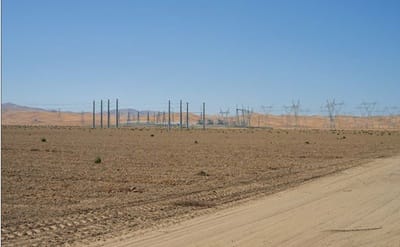
There’s a lot to celebrate here. The substation, which is scheduled to be completed by 2028, will:
- Add transmission capacity needed to connect West Fresno County solar and storage projects to the grid, supporting California’s clean energy goals and bolstering reliability.
- Help address congestion in the notorious Path 15 transmission corridor that ferries power between Northern and Southern California.
- Be developed under cost-containment measures, which we’ve highlighted as critical benefits of competitively bid transmission projects. LS Power’s strong track record of containing costs helped it win the bid.
“Fast tracking transmission projects is essential and maintaining competition in transmission development drives strong schedule accountability,” Margaret Bratcher, senior project manager for LS Power, said in a press release announcing the start of construction. “We’re proud to move Manning forward ahead of schedule and deliver power infrastructure that strengthens the grid and supports the region’s future.”
Doing the numbers
Our colleagues at the ACP mothership in D.C. recently published a market report on clean energy development in the fourth quarter of 2025.
The market reports are always interesting, but what stood out to me this time were the battery storage numbers for California and Texas.
Texas has long led California on wind, and in 2024 the Lone Star State overtook California on solar. Now it’s on our tail on battery storage.
At the end of 2025, California still held the lead with 15.47 gigawatts of battery storage online. Almost all of it has come online since 2019, reflecting the state’s — and Gov. Gavin Newsom’s — remarkable success in deploying the technology to complement California’s abundant solar power.
Texas had 15.32 GW. The state added 2,381 GW in the fourth quarter of last year, compared to California’s 398. Texas also had the most battery storage under construction at the end of the year, suggesting it’s about to take the lead. The state’s speedy grid additions deserve a deeper dive another day, but for now we’ll just tip our hat.