California’s high-wire act to save money on power lines

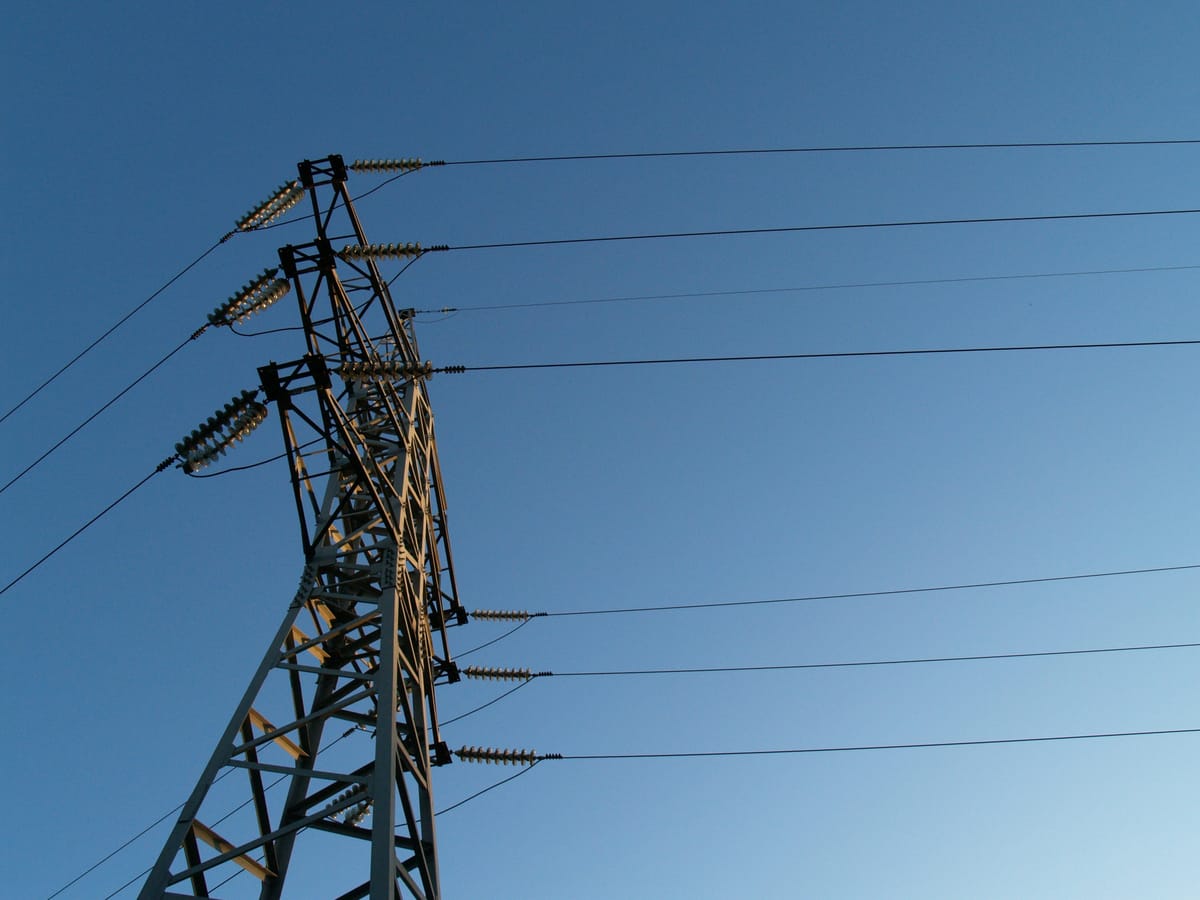
One of the energy policy “planes” that landed in the final days of last year’s legislative session had in its cargo hold a rough draft of a plan that aims to save billions of dollars on new power lines.
The proposal in Senate Bill 254 seeks to save money on transmission financing costs, which over decades can exceed the actual costs of designing and building new high-voltage lines because of return-on-equity requirements under the prevailing utility-based model.
It’s a novel approach to containing costs as California builds out its grid to meet growing electricity demand and its clean energy goals. But there are risks, and lawmakers and the administration should prioritize protecting competition among private developers as the proposal takes shape.
The idea at the core of the new program, called the California Transmission Infrastructure Accelerator, is to fund projects with low-interest government bonds and loans that are cheaper than the utilities’ financing, which includes guaranteed returns of about 10%.
The program would apply only to a small subset of projects that are open to competitive bidding in California, and many details remain to be determined, but the model would most likely involve a government entity financing new lines and private companies building them.
SB 254 directed the Governor’s Office of Business and Economic Development (Go-Biz) to get started on a program this year. Go-Biz proposed hiring 10 people to implement the new program over the next five years. The initial push is being funded with $322.5 million from Prop 4, the voter-approved climate bond.
California needs more transmission to keep the grid resilient and reliable in the decades to come. New transmission also has affordability benefits, because electricity is more expensive when it’s shipped over congested lines. Exhibit A is a Central Valley line known as Path 15, which is projected to become so busy that the congestion will drive up electricity costs by $1.2 billion by 2035, according to CAISO.
Transmission is essential. For those who don’t follow this stuff closely, here’s a quick primer on how it’s traditionally financed:
Utilities finance, design, build, own and operate nearly all new transmission in the U.S., and they charge ratepayers for the infrastructure on their electric bills under tariffs approved by the Federal Energy Regulatory Commission.
California’s three investor-owned utilities finance new infrastructure with a combination of equity (about 53%) and debt. The equity portion delivers a guaranteed return to the utilities’ shareholders of about 10% — ultimately paid by ratepayers — while the debt portion costs ratepayers less. California utilities paid about 5% on their debt in 2022.
The accelerator program in SB 254 aims to finance projects with a lot more debt and a lot less equity, and it would offer a 20% state tax credit to private developers.
The public-private partnership model contemplated in the bill promises tantalizing savings amid the state’s persistent affordability challenges. But reality is messier than the models, and it’s important to make sure unintended consequences don’t undermine the benefits of California’s competitive private market for transmission lines. For example, competitively bid projects typically include cost-control mechanisms that provide a backstop against runaway costs sometimes seen in the public sector. It’s hard to imagine those provisions applying to a government entity, and without them, costs could balloon.
Independent transmission development got started back in 2011, when FERC opened up a selection of transmission projects to private competition where previously they had been the province of utilities alone. The experiment paid off: In CAISO’s territory, a portfolio of projects that utilities had priced at $1.2 billion went to competitive bidders for a projected cost of about $833 million — a savings of 29%, according to a Brattle Group study that looked at projects from 2013 to 2019.
In California, private bidding is only permitted for the biggest transmission projects (over 200 kV) that aren’t considered upgrades to utilities’ existing infrastructure. CAISO’s 2022-2023 transmission plan approved 46 projects, but only three were eligible for competitive solicitation (though they did account for 43% of the total cost).
Under SB 254, only that same small subset of projects – those subject to competitive bidding at the CAISO – would be eligible for public financing. In the new model, GO-Biz would conceivably select a project for the program and then play matchmaker between an interested public entity and a private company with transmission development expertise.
But the terms and structure of this public-private relationship are important, and at this point uncertain. Private developers would generally want to maintain a significant ownership share, earn a rate of return on their invested capital, and be clear on their obligations and liabilities in the project upfront — certainly before bidding into the CAISO’s solicitation.
Typically, the equity-financed share of a project’s cost makes lenders more comfortable issuing loans because it reduces the lender’s risk. Under a public financing model, the lender would be taking on more risk. SB 254 contemplates California’s I-Bank lending the money, and the I-Bank would need to evaluate that risk.
These challenges aren’t necessarily insurmountable. Real-world models such as New Mexico’s Renewable Energy Transmission Authority — while much more limited in scope than what’s contemplated in SB 254 — have produced positive results. But it’s crucial to ensure private developers still find it attractive to invest in California.
The Assembly Utilities and Energy committee took up the accelerator program in its first oversight hearing of the year on Jan. 15. Members seemed clear-eyed about the scope of the undertaking.
“It’s certainly creative, it’s certainly needed,” said Assemblymember Steve Bennett, who chairs a budget subcommittee that will oversee implementation. “It’s complex, so it’s going to be interesting.”
Put another way, SB 254’s public financing plan is cargo that should be handled with care.
The answer isn’t blowing in the wind
Our friends at the Union of Concerned Scientists checked in on the state of wind power development in California in a recent blog post. It’s not encouraging.
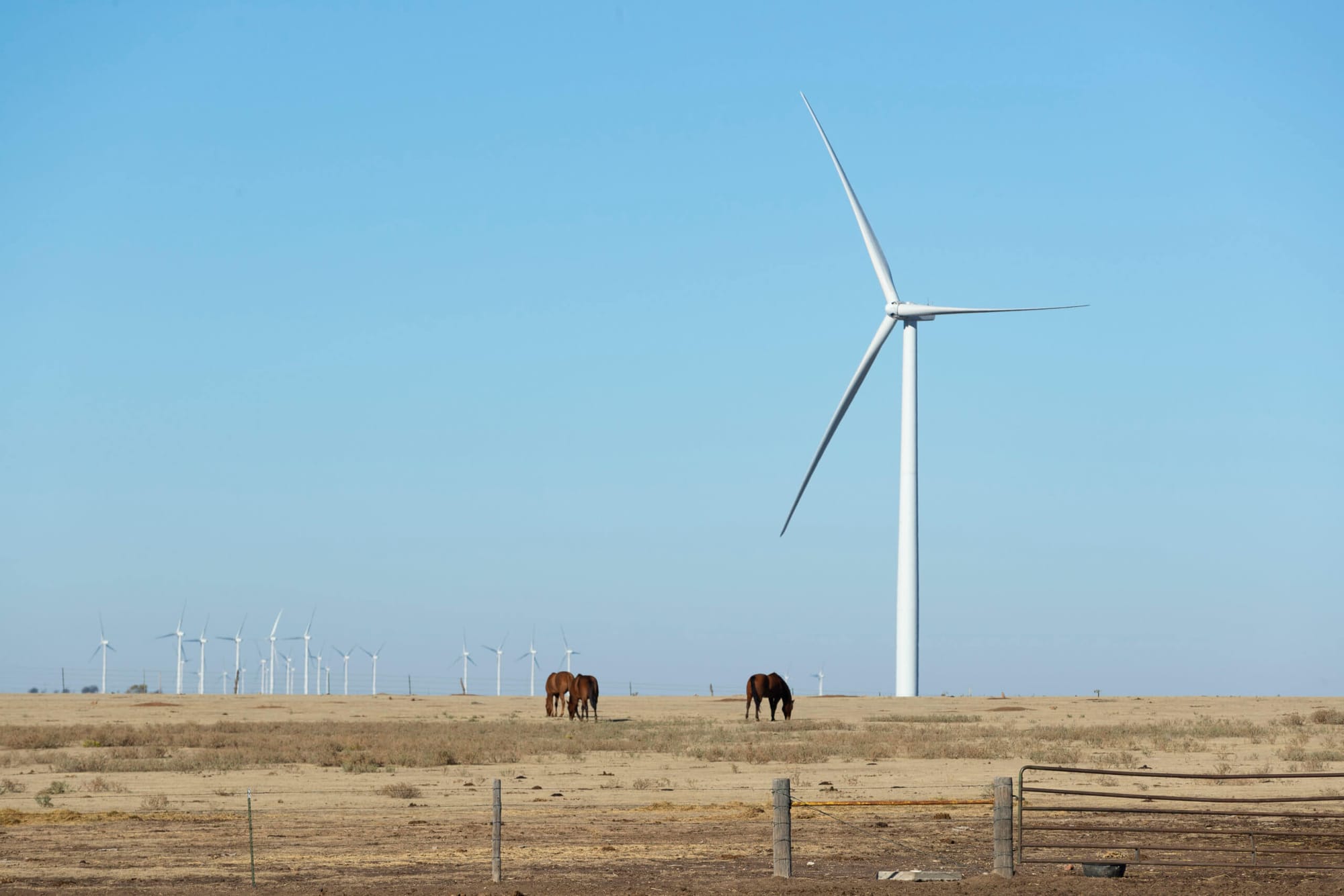
UCS’ Mark Specht notes that while wind is on the rise around the country, it’s on the retreat here in one of its birthplaces (Altamont Pass, 1980s) and at a time when new projects are sorely needed.
Why?
Specht points to a combination of factors. For one, many of the best spots are already taken. Also, solar got cheap, making it more attractive to utilities and other electricity providers shopping around to fulfill their Renewable Portfolio Standard requirements.
Wind also tends to face more local opposition, Specht notes, and opponents recently won a major victory in Shasta County, where the Fountain Wind project was blocked.
The project was essentially an expansion of an existing project that had been operating without incident for years. But local government agencies came out against it, and then in December the California Energy Commission denied the developer’s request to use the state’s streamlined AB 205 process to override the local opposition.
Developers warned that denying Fountain Wind would chill investment in projects in other parts of the state where wind hasn’t been built, reasoning that if the CEC wouldn’t use AB 205 to approve Fountain Wind, it probably wouldn’t use it for other projects. CEC officials have insisted that’s not the case.
Specht identifies a few projects that are in good shape, including the Gonzaga Ridge Wind Project and the Keyhole Wind Project. But his synopsis of other projects hanging around in the CAISO queue isn’t promising.
Out-of-state wind looks better, with new transmission lines set to import large quantities of wind power. But without focused attention from California to accommodate in-state development, the prospects for building more wind here — and the consequences if we can’t — are pretty grim.
Specht points to CPUC modelling showing the state will need 5 to 10 GW of new wind by 2030 and more than 25 GW of new wind by 2045. Without it, the replacements needed to fill the gap would cost $10 billion more, according to an analysis from consulting firm E3.
More diversity means more resilience, more reliability and better prices. That’s why wind is still in the state’s plans. California should get serious about a course correction that will make the plans a reality sooner rather than later.
What’s happening
Here are a few other things on our radar:
— Our ACP colleagues in D.C. ran the numbers on a future without renewables for the PJM regional grid. Takeaway: The nine PJM states would pay $360 billion more over the next 10 years, costing the average household $3,000 to $8,500.
— Four of the top-polling candidates for governor talked climate at a California Environmental Voters forum last week. “Abundance” was one of the first words out of a candidate’s mouth, but details were scant.
— The Assembly Utilities and Energy Committee is holding a hearing Feb. 18 titled, “Assessing Progress in Developing Clean Energy.” Details to come.